
Pool Betting vs Fixed Odds: Two Systems for UK Horse Racing
 Available in US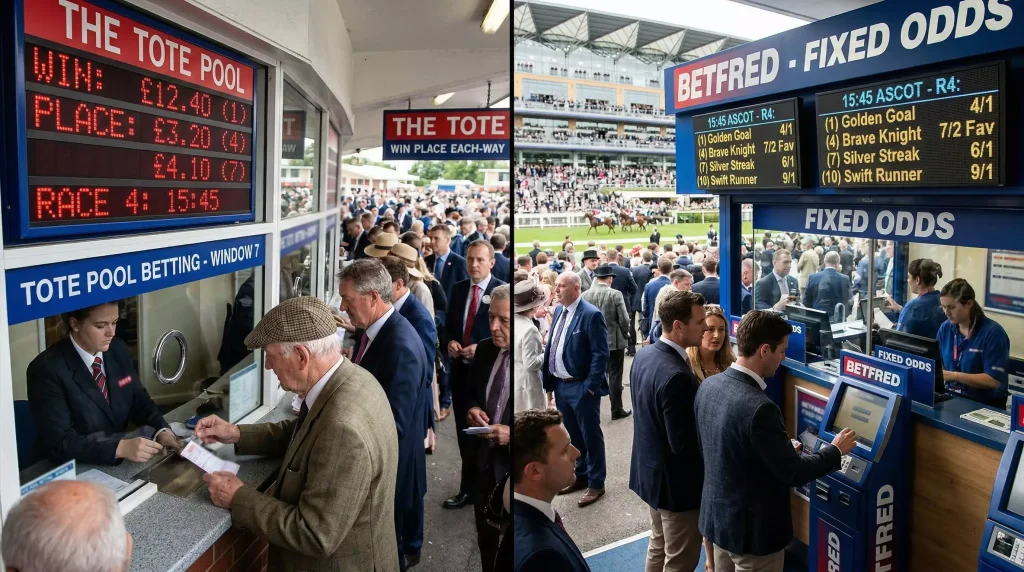
UK horse racing offers two fundamentally different betting systems: pool betting through the Tote and fixed-odds betting through traditional bookmakers. Both allow you to wager on the same races, but the mechanics behind your payout differ completely.
Understanding these differences matters for tricast and trifecta betting especially. The pool-based trifecta and the CSF-calculated tricast settle through entirely different processes, often producing different dividends for identical results. Research shows trifectas pay approximately 26% more on average—a meaningful advantage rooted in structural differences between the systems.
Neither system is universally superior. Pool betting offers advantages in certain situations; fixed odds provides benefits in others. Smart punters understand both and choose appropriately based on race conditions and personal preferences.
The two systems have coexisted for nearly a century, each serving distinct market segments and betting styles. Both have evolved with technology and regulation while maintaining their core principles.
This comparison explains how each system works and when each might offer better value for exotic betting.
Pool Betting vs Fixed Odds — More on this topic at tricast horse racing.
How Pool Betting Works
Pool betting—also called parimutuel—collects all stakes on a particular bet type into a common fund. The operator takes a fixed percentage deduction, then distributes the remainder among winning tickets. Your payout depends entirely on how many others backed the same outcome.
For trifecta, the Tote pools all stakes predicting each possible 1-2-3 combination. After the race, the pool for the winning combination is calculated. The Tote deducts 25% for UK races (30% for Irish races), then divides the remainder by the number of winning unit stakes.
If the trifecta pool contains £10,000 after deduction and fifty £1 tickets correctly predicted the result, each ticket receives £200. If only five tickets won, each receives £2,000. The fewer winners, the bigger the individual payout.
This creates a fundamentally different incentive structure. The Tote is, as they describe themselves, “agnostic about the outcome of events.” Their profit comes from the fixed deduction regardless of which horses win. They have no financial interest in specific results, which means they “actively welcome winning customers” rather than restricting successful punters.
Pool dividends are unknown until betting closes. You cannot calculate your exact payout in advance because it depends on final pool composition. Indicative dividends shown during betting are estimates only—actual payouts emerge after the race.
The Tote operates pools at all UK racecourses and through digital platforms. Trifecta is available on any race with three or more runners—far broader access than the tricast’s restriction to handicaps with eight-plus declared.
Pool liquidity varies by meeting. Royal Ascot and Cheltenham generate enormous pools where dividends distribute predictably. Smaller weekday fixtures may have thinner pools, creating greater dividend variance. Understanding pool dynamics helps manage expectations.
How Fixed Odds Works
Fixed-odds betting means you bet against the bookmaker at agreed terms. For tricasts, the dividend is calculated using the Computer Straight Forecast formula based on Starting Prices—a standardised calculation applied uniformly across all participating bookmakers.
The CSF processes the SPs of all runners, the finishers’ positions, favourite performance, field size, and course-specific factors to generate the dividend. This calculation happens centrally; every bookmaker pays the same CSF dividend for any given result.
Unlike pool betting, your tricast payout does not depend on how many others backed the same combination. The CSF produces the same dividend whether one punter or one thousand predicted the exact 1-2-3. The formula, not the betting patterns, determines the return.
Bookmakers profit from the built-in margin in their odds and CSF calculations. The tricast dividend is designed to ensure the industry maintains profit across the range of possible outcomes. This creates an inherent conflict: the bookmaker benefits when you lose.
Fixed-odds tricasts are available only on handicap races with eight or more declared runners and at least six starting. This restriction ensures sufficient unpredictability to justify the bet’s complexity and generate meaningful dividends.
The advantage of fixed odds is predictability. Once you understand how CSF works, you can roughly estimate likely dividends based on the horses’ prices. Pool betting offers no such predictability—dividends emerge only after betting closes and actual pools are calculated.
Bookmaker promotions occasionally enhance tricast returns. Free bets, money-back offers, and bonus payments may apply to exotic bets, adding value beyond the base CSF dividend. Pool betting rarely features equivalent promotions.
Key Differences
The structural differences between pool and fixed-odds betting produce measurably different outcomes. Research across over 1,000 UK and Irish handicap races found that trifecta dividends average 26% higher than tricast dividends for identical results. In four out of five races, the trifecta paid more.
This advantage stems from pool dynamics. When unexpected results occur—outsiders filling the places, favourites failing—few pool tickets match. Winners share a larger pot between them. The CSF, by contrast, calculates dividends based on odds without regard to how many punters backed the winning combination.
In 14.3% of races studied, the trifecta paid at least double the tricast. Only 2% of races showed the reverse—tricast paying double the trifecta. The distribution is heavily skewed toward trifecta advantage, particularly in larger fields where unpredictability is highest.
Payout timing differs too. Pool dividends remain unknown until after the race; CSF dividends can be roughly estimated from prices beforehand. If certainty matters to you, fixed odds provides it—at the cost of typically lower returns.
Access varies between systems. Trifecta is available on virtually all races; tricast is restricted to specific handicaps. The trifecta’s broader availability opens opportunities in non-handicap races where tricast betting simply does not exist.
Operator relationship differs fundamentally. The Tote profits regardless of which horses win; bookmakers profit when you lose. This structural difference affects how each treats successful punters over time.
Pool size matters for trifecta value. Major meetings generate substantial pools where dividends distribute smoothly. Smaller meetings may have thin pools, increasing variance. Check pool sizes before betting if consistent dividend quality matters to you.
The 25% Tote deduction sounds steep compared to implicit bookmaker margins. In practice, pool dynamics often overcome this disadvantage—unexpected results pay disproportionately well because few winning tickets share the spoils.
For punters who bet regularly and successfully, the Tote’s structural neutrality becomes valuable. Fixed-odds bookmakers may restrict winning accounts; the Tote welcomes all customers equally regardless of their track record.
Two Systems, One Sport
Pool betting and fixed odds represent genuinely different approaches to the same fundamental activity: wagering on horse racing outcomes. Each has strengths; each has limitations. Understanding both helps you choose appropriately for different situations.
For exotic bets like trifecta and tricast, the data suggests pool betting typically offers better value—26% higher average dividends is significant. Consider trifecta as your default for larger competitive handicaps where pool dynamics favour outsized payouts.
Fixed-odds tricast remains appropriate when convenience matters, when you prefer dealing with your regular bookmaker, or when the specific race does not fit trifecta criteria. The CSF provides fair, consistent settlement even if dividends are typically lower than pool equivalents.
Both systems coexist in UK racing, serving different preferences and situations. Mastering both expands your betting options and helps extract maximum value from your exotic betting activity. The choice between them is situational, not absolute—and informed punters use both systems strategically depending on race conditions and dividend expectations.
See also Tricast Betting Risks.
