
History of the Tote UK: From Churchill’s 1928 Act to Modern Pool Betting
 Available in US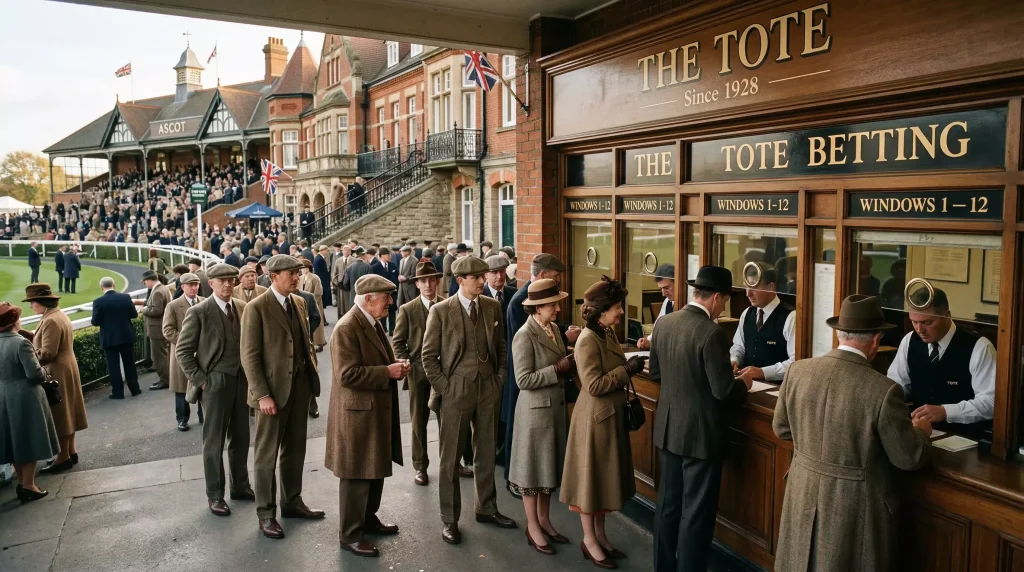
The Tote stands as a unique institution in British betting—the only wagering operator ever founded by government through an Act of Parliament. Its history spans nearly a century, from Winston Churchill’s chancellorship through privatisation and consortium ownership to its current role as the UK’s pool betting specialist.
Understanding the Tote’s history illuminates how pool betting differs fundamentally from fixed-odds bookmaking. The Tote was created to offer an alternative to illegal bookmakers, operating on parimutuel principles where punters bet against each other rather than against the house.
This heritage continues to shape the Tote’s identity and products. The trifecta, Placepot, Scoop6, and other pool bets trace their lineage to that 1928 foundation. Knowing where these bets came from helps appreciate why they work differently from standard bookmaker offerings.
The Tote’s journey from government monopoly to private ownership reflects broader changes in British gambling regulation and racing industry structure. Each era brought new challenges and adaptations while preserving the core pool betting model.
History of the Tote UK — More on this topic at tricast horse racing.
The 1928 Foundation
The Racecourse Betting Act 1928 created the Tote under the chancellorship of Winston Churchill. As the UK Tote Group has stated: “The Tote is the only betting operator to have been founded by the Government through an Act of Parliament in 1928 when Sir Winston Churchill was Chancellor of the Exchequer.”
The context was regulatory concern. Off-course betting was illegal, but flourished through unlicensed bookmakers. On-course betting remained legal but unregulated, creating inconsistent practices and consumer protection gaps. The government sought a controlled alternative that could offer betting while returning profits to racing.
Pool betting—or parimutuel—provided the model. Established in France and already used elsewhere internationally, pool betting collected all stakes into a common fund, deducted operating costs, and distributed the remainder to winning tickets. No conflict of interest between operator and punter: the Tote’s profit came from a fixed percentage, not from punters losing.
The Horserace Totalisator Board operated the Tote as a statutory body. Surpluses flowed back to racing through prize money contributions and industry investment. This unique structure—a government-created betting monopoly whose profits supported the sport—had no parallel anywhere in British gambling.
Initially, the Tote operated only on racecourses. Punters visited tracks to place pool bets, choosing the Tote windows as an alternative to on-course bookmakers. This limitation would gradually ease over subsequent decades as regulations evolved.
The 1928 Act established principles that endure today: pool betting as collective wagering, operator returns tied to deduction rates rather than bet outcomes, and a structural commitment to supporting British racing.
The Tote’s launch proved successful. Punters embraced the regulated alternative, appreciating transparent dividend calculations and the assurance of government oversight. Racing benefited from the revenue stream, establishing the symbiotic relationship that continues today.
Evolution Through Decades
The post-war years saw the Tote expand its product range and presence. The Jackpot bet launched, challenging punters to pick winners across multiple races. The Placepot followed, requiring placed horses rather than winners—a more accessible variant that became one of the Tote’s most popular products.
The 1961 Betting and Gaming Act transformed British gambling by legalising off-course betting shops. Bookmakers proliferated on high streets; the Tote lost its monopoly advantage. Competition intensified, forcing the Tote to innovate and adapt rather than relying on regulatory protection.
The Scoop6 emerged as the flagship accumulator pool, offering life-changing jackpots for correctly selecting winners across six Saturday races. Its rollover structure created headline-grabbing prize funds that attracted mainstream attention and casual punters who might never otherwise engage with racing betting.
Privatisation discussions periodically surfaced from the 1990s onward. The government-owned betting monopoly seemed anachronistic as gambling liberalised and commercial operators expanded. Various sale proposals emerged, debated, and stalled over multiple administrations.
In 2011, the sale finally completed. Betfred acquired the Tote for £265 million, ending direct government ownership after 83 years. The purchaser committed to maintaining pool betting and the Tote’s identity, though integration with Betfred’s broader operations inevitably followed.
The Betfred era brought modernisation alongside concerns about pool betting’s future within a fixed-odds bookmaking group. Critics worried that pool products would be deprioritised; supporters noted that Betfred’s scale could expand Tote access to new customers.
Throughout these changes, the Tote maintained its on-course presence. Tote windows at British racecourses remained a familiar sight, offering punters an alternative to on-course bookmakers. The tactile experience of betting at the track with the Tote connected generations of racegoers to pool betting traditions.
International expansion brought the Tote’s pool betting expertise to overseas markets. Partnerships and technology licensing extended the parimutuel model beyond British shores, though the UK market remained the core focus.
The Tote Today
A consortium including Alizeti Capital acquired the Tote from Betfred in 2019, creating the UK Tote Group. This ownership structure explicitly prioritised pool betting renewal, promising investment in technology, products, and the Tote brand.
The modern Tote operates through digital platforms alongside traditional on-course facilities. Website and mobile app access makes pool betting available to anyone with an internet connection, removing the historical limitation to racecourse attendance.
The product range continues to evolve. Trifecta remains the pool equivalent of the bookmaker tricast—predict the 1-2-3 in exact order and share the pool with other successful punters. The Tote’s commitment to pool betting means these products receive focused attention rather than serving as side offerings within a fixed-odds portfolio.
The UK Tote Group emphasises its unique position in the market. As they note in official submissions, the Tote operates as “a pool betting operation” offering “bets on horseracing that cannot be matched by fixed-odds bookmakers.” This structural difference—being “agnostic about the outcome of events”—means the Tote “actively welcomes winning customers” rather than restricting successful punters as some bookmakers do.
Returns to racing remain part of the Tote’s identity. A portion of pool revenue supports prize money and industry services, maintaining the founding principle that Tote profits benefit the sport it serves.
Digital investment has modernised the betting experience. Live pools show building dividends as races approach. Streaming integration allows watching races within the Tote platform. The user experience increasingly matches online bookmaker standards while retaining pool betting’s distinctive mechanics.
The Tote’s place in British racing culture remains secure. Festival meetings see substantial pool activity; major handicaps generate headline dividends; the Placepot and Scoop6 attract punters seeking multi-race challenges that fixed-odds betting cannot replicate.
See also Computer Straight Forecast.
A Century of Pools
The Tote’s journey from Churchill’s 1928 Act to today’s digital platform spans nearly a century of British racing history. Through government ownership, privatisation, and consortium acquisition, the core principle endures: pool betting where punters compete against each other rather than against the house.
This heritage matters for trifecta bettors. The pool structure that makes trifectas often pay more than tricasts traces directly to 1928’s founding vision. Understanding that history helps appreciate why the Tote operates differently and why pool dividends behave as they do.
The Tote survived threats that could have ended pool betting in Britain. It adapted to competition, regulation changes, and ownership transitions. Each challenge strengthened rather than diminished its commitment to the parimutuel model.
Nearly 100 years on, the Tote continues evolving while maintaining its distinctive identity. Pool betting endures as a meaningful alternative to fixed-odds wagering, offering punters a different relationship with probability and reward.
