
How Draw Bias Suppresses Tricast Dividends: The Hidden Factor
 Available in US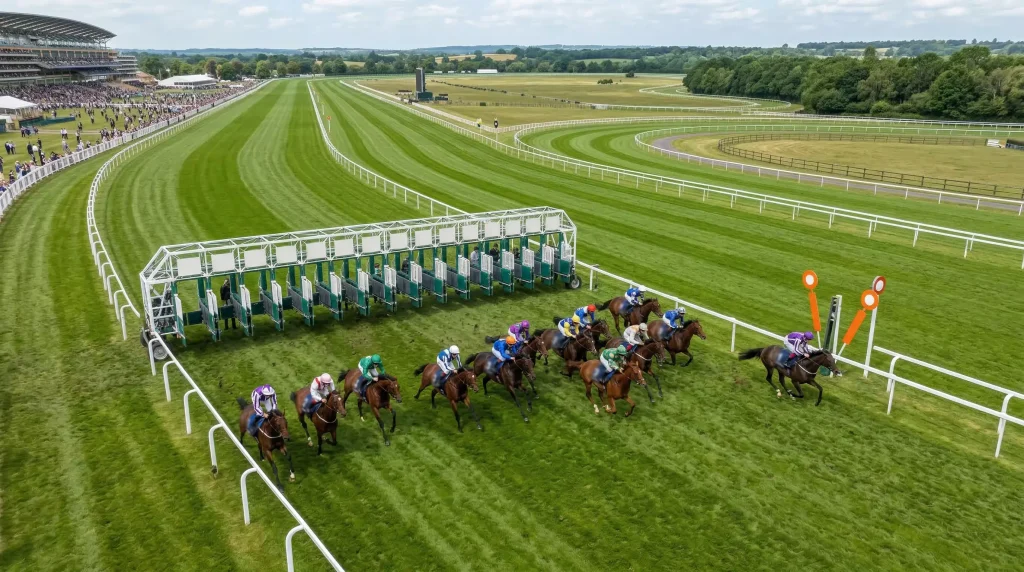
Your tricast lands. Three outsiders fill the places at combined odds that should produce a four-figure dividend. You check the result, anticipate the payout, and then discover the actual CSF dividend is barely half what you expected. What happened?
The answer often lies in draw bias—the invisible hand that shapes tricast dividends at certain courses. The Computer Straight Forecast formula does not simply multiply odds together. It adjusts for factors that make results more or less predictable, and draw bias at specific tracks is one of those factors.
When horses from advantaged draw positions fill the places, the CSF recognises that the outcome, while perhaps surprising in absolute terms, aligned with course tendency. The result was more predictable than raw odds suggested. The dividend contracts accordingly.
Understanding draw bias helps explain dividend variations that otherwise seem arbitrary. It also informs race selection—targeting low-bias courses where results deviate less from pure probability and tricast dividends pay closer to theoretical expectations.
How Draw Bias Suppresses Tricast Dividends — More on this topic at tricast horse racing.
What Is Draw Bias
Draw bias refers to the statistical advantage or disadvantage created by a horse’s starting stall position at certain racecourses. Track configuration—particularly the distance from the start to the first bend and the tightness of turns—determines whether low-numbered stalls (near the inside rail) or high-numbered stalls (towards the outside) perform better over time.
At tight, turning tracks, inside positions often dominate. The horse in stall 1 has the shortest route to the rail and around the first bend. They can establish position without covering extra ground. Higher-drawn horses must either show exceptional early speed to cross over or accept racing wider, covering more distance throughout.
At courses with long straights before the first bend, the advantage diminishes or reverses. Horses have time to find position regardless of starting stall. Some straight-course sprints show high-draw advantages because of specific ground conditions along different parts of the track.
Draw bias statistics are well-documented. Racing data services publish historical performance by stall number at each course and distance. Informed punters incorporate this data into their analysis, favouring horses with advantageous draws and discounting those who face positional challenges.
The CSF formula incorporates this knowledge. Exactly how it does so remains proprietary, but the effects are visible in dividend patterns. When results align with known draw tendencies—when inside draws fill the places at courses where inside draws historically dominate—dividends compress. The outcome was not as surprising as the odds alone suggested.
This adjustment makes mathematical sense. If stall 1 wins 25% of races at a particular course compared to the 10% base rate, backing horses drawn there is systematically more likely to succeed. The CSF accounts for this elevated probability by reducing dividends when such horses win.
Victoria Cup 2022 Case Study
The 2022 Victoria Cup at Ascot provides a stark illustration of draw bias suppressing tricast dividends. The first three horses home were priced at 16/1, 22/1, and 25/1—a combination that ordinarily would generate a tricast dividend in the range of £8,700 to £9,300 based on those odds.
The actual dividend was £4,377—roughly half the expected amount.
What explained the discrepancy? All three placed horses came from high draw numbers. At Ascot over the Victoria Cup distance, high draws historically perform well. The round course configuration and positioning of the sprint track favour horses drawn towards the outside in large fields.
The CSF formula recognised this pattern. Three horses from advantaged draws filling the places was less surprising than their individual Starting Prices suggested. Each horse’s odds reflected their overall winning chance, but the draw gave them additional probability uplift that the SP did not fully capture. The dividend adjusted downward to reflect this hidden predictability.
For punters holding that tricast, the result was frustrating. They correctly identified three outsiders and received barely half the anticipated return. The draw had worked in their favour—helping their horses finish in the places—but the same draw advantage suppressed their dividend.
This case illustrates why simple odds multiplication fails to predict tricast dividends accurately. The CSF incorporates variables beyond SP, and draw bias is among the most impactful at courses with pronounced positional advantages.
Informed punters now approach high-bias courses with adjusted expectations. The big-dividend tricasts are harder to find when draw advantages compress payouts on results that align with course tendency.
See also Field Size and Tricast Payouts.
High Bias vs Low Bias Courses
British racecourses vary dramatically in draw bias intensity. Some tracks show pronounced advantages for specific stall positions; others distribute winning chances more evenly across the draw.
Chester represents the extreme. Its tight, nearly circular configuration creates massive inside-draw advantages over most distances. Horses drawn 1 or 2 win at rates far exceeding statistical expectation. Racing from high draws at Chester is a significant handicap that only exceptional horses can overcome.
Beverley and Thirsk also show notable biases, though less extreme than Chester. At Beverley, the uphill finish and track camber create positions where certain draws consistently outperform. Thirsk’s sprint course favours low draws in larger fields.
Research comparing tricast and trifecta payouts identified The Curragh in Ireland as producing particularly large disparities—with the trifecta paying at least double the tricast in roughly 30% of races analysed. This may reflect draw bias effects on the CSF calculation, with the pool-based trifecta less sensitive to course-specific adjustments.
Low-bias courses include Newmarket’s straight course, where the absence of bends eliminates positional advantage, and Sandown, where track width and configuration spread chances more evenly. At these venues, tricast dividends more closely approximate what raw odds multiplication would predict.
For tricast punters seeking maximum dividend potential, low-bias courses offer cleaner opportunities. Results at these tracks are determined more by horse quality and less by starting position, meaning the CSF applies fewer predictability adjustments. The same long-odds combination might pay noticeably more at Newmarket than at Chester.
Course selection becomes a strategic variable. When multiple attractive handicaps run on the same day at different venues, considering draw bias adds another dimension to your analysis.
Seasonal factors compound the effect. Soft winter ground can exaggerate draw biases at some courses, while firm summer conditions may reduce them. The rail position—whether on the inner or outer part of the track—shifts during meetings and can create temporary biases that historical data does not capture. Staying informed about current conditions adds nuance to draw-bias analysis.
The Invisible Hand
Draw bias operates as an invisible hand in tricast dividend calculation. The CSF formula adjusts for course-specific tendencies, compressing dividends when results align with known advantages and potentially expanding them when results defy expectation.
The Victoria Cup 2022 demonstrated this starkly: a tricast paying roughly half the expected dividend because all three placed horses came from advantaged high draws at Ascot. The outcome was less surprising than the odds suggested, and the CSF reflected this.
For tricast punters, the implications are practical. Research draw statistics before betting. Recognise that high-bias courses may suppress dividends even when you correctly identify long-odds combinations. Consider targeting low-bias venues where results more closely track pure probability and dividends pay closer to theoretical expectations.
The draw is not invisible to the market—SPs partially reflect draw advantages. But the CSF applies additional adjustments that can catch punters off guard. Knowing this factor exists helps set realistic expectations and informs smarter course selection.
