
Dead Heat Tricast Rules: How Payouts Are Divided
 Available in US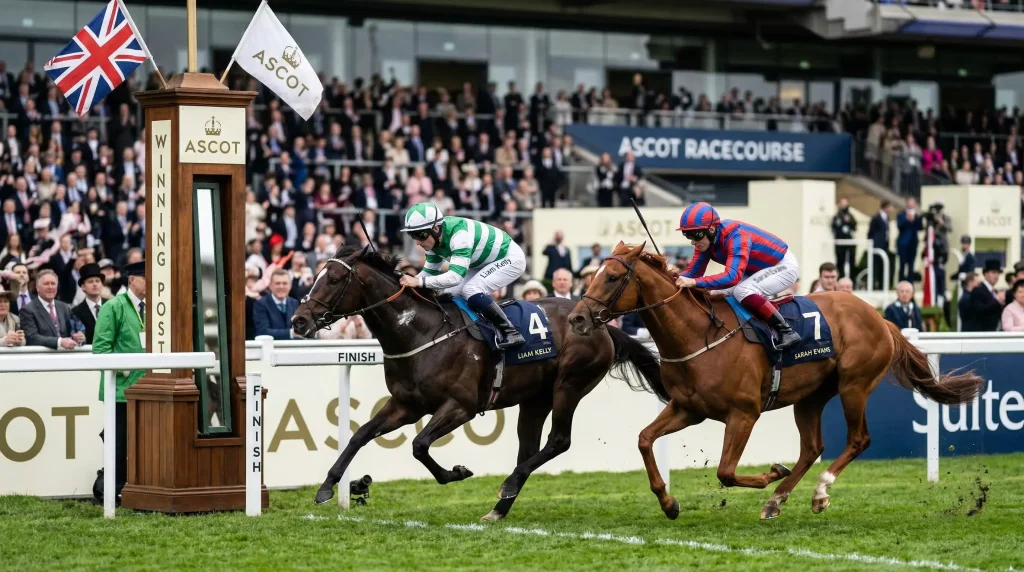
The photo-finish camera delivers its verdict: dead heat. Two horses crossed the line simultaneously, inseparable by the technology designed to split them. They share the placing—both officially second, or both third. The result stands, but your tricast calculation just became more complicated.
Dead heats in horse racing are uncommon but far from rare. British racing sees perhaps a dozen each year across all meetings, and when one occurs in a race where you hold a tricast bet, the payout rules differ from standard settlement. Your dividend is not voided, but it is divided.
The division follows logical principles. If two horses share second place in your tricast, the portion of your dividend attributable to second place is halved. If three horses dead-heat for third, that portion is divided by three. The mathematics can reduce a potentially large payout to something more modest—but you still collect, provided your selections finished in the requisite positions.
Understanding dead heat rules before they affect your bet prevents the frustration of unexpected reduced returns. The rules are standardised across UK bookmakers, though the scenarios they cover range from simple two-way ties to complex multiple dead heats that require careful calculation.
Dead Heat Tricast Rules — More on this topic at tricast horse racing.
How Dead Heat Works
A dead heat occurs when two or more horses finish a race in an identical time, as determined by the photo-finish equipment. The judge examines the image and declares the horses inseparable. Rather than picking a winner arbitrarily, racing rules dictate that the placing is shared.
Dead heats can occur at any finishing position, though they are most common for second and third. A dead heat for first—two joint winners—is the rarest outcome, happening perhaps once or twice a year across all British racing. Dead heats for second or third occur more frequently, as these horses are often racing hard against each other for minor placings while the winner has already established clear water.
When a dead heat is declared, both horses occupy the same official position. In a dead heat for second, there is no third place in the conventional sense—both horses are second, and the next finisher is fourth. This has implications for all place-related bets, including tricasts.
The official result reflects the dead heat clearly. Racecards and results services show “DH” next to the affected horses, indicating they share the position. Betting settlements are calculated from this official result, not from any notional separation the naked eye might have perceived.
For punters, the critical question is whether your tricast selections include a horse involved in the dead heat—and if so, how that affects your payout. A dead heat involving horses outside your tricast has no impact on your bet. A dead heat involving one of your selections triggers the division rules.
The division applies only to the affected position. If your horse dead-heats for second, only the second-place portion of your dividend is divided. The first-place and third-place components remain whole, assuming no dead heats at those positions.
Payout Calculation
The dead heat reduction rule is straightforward in principle: divide the affected portion of your bet by the number of horses sharing the position. A two-way dead heat means division by two. A three-way dead heat means division by three.
Consider a tricast paying a £600 dividend under normal circumstances. Your horse in second place dead-heats with another. Under standard bookmaker rules, your payout is halved: you receive £300 instead of £600. The entire dividend is subject to the dead heat rule because the dead heat directly affects your tricast combination.
The calculation becomes more nuanced when considering what the dead heat represents. In effect, only one of the dead-heating horses can occupy the position for betting purposes—but both are equally entitled to it. Your bet is treated as having a 50% share of that outcome. The dividend reflects this fractional entitlement.
For three-way dead heats—rare but possible—the division is by three. A £600 dividend becomes £200. Four-way dead heats divide by four. The principle scales to however many horses share the position, though dead heats involving more than two horses are exceptional.
Combination tricasts follow the same logic, but applied to whichever permutation matches the actual finishing order. If your combination tricast wins because of the A-B-C permutation, and B dead-heats for second, that winning permutation’s dividend is halved. The five losing permutations within your combination remain losers—the dead heat does not create additional winning combinations.
Settlement is automatic. Bookmakers apply the dead heat rule without requiring punter intervention. Your account or betting slip simply reflects the reduced dividend based on the official result.
Critically, a dead heat reduces your payout but does not void your bet. You backed a horse to finish second; that horse officially finished second (jointly). The bet wins, albeit at a fraction of the full dividend. This is materially different from a non-runner scenario, where your bet might convert to a different type entirely.
One subtlety worth noting: if your horse dead-heats but you did not include the other dead-heating horse in your tricast, you still collect your reduced dividend. The identity of the horse sharing the position is irrelevant—only the fact of the dead heat matters. Your selection achieved the placing; the sharing simply divides the payout.
See also Tricast Minimum Runners.
Multiple Dead Heats
The rarest scenario involves dead heats at more than one position—perhaps a dead heat for first and a separate dead heat for third, or some other combination. When this occurs, the divisions compound.
Imagine a race where two horses dead-heat for first and two horses dead-heat for third. Your tricast backed one of the joint winners, a clear second, and one of the joint third-place finishers. Each dead heat triggers its own division. The portion attributable to your first-place selection is halved; the portion attributable to your third-place selection is also halved.
The mathematics multiply the reductions. A full dividend of £600 subject to two separate dead heats (each two-way) becomes £600 × 0.5 × 0.5 = £150. Your payout is one-quarter of the undivided amount.
Three-way dead heats compound similarly. If your first-place selection dead-heats with two others (dividing by three) and your third-place selection dead-heats with one other (dividing by two), the calculation is £600 × (1/3) × 0.5 = £100.
These scenarios are extremely uncommon. British racing might see one or two races per year with multiple dead heats, and the probability of your tricast selections being involved in both is vanishingly small. Nevertheless, understanding the compounding principle prepares you for the unexpected.
When checking results, look for multiple “DH” indicators. If you see dead heats at positions relevant to your tricast, calculate the expected reduction before checking your account. Bookmaker systems handle the mathematics correctly, but knowing what to expect prevents confusion when the credited amount differs substantially from the headline dividend.
Divided but Not Denied
Dead heats reduce your tricast dividend but do not eliminate it. Your selection finished in the required position—they simply shared that position with another horse. The bet wins; the payout shrinks.
The division rules are logical: divide by the number of horses sharing the position. Two-way dead heats halve your payout. Three-way dead heats reduce it to a third. Multiple dead heats at different positions compound these reductions.
These outcomes are uncommon enough that most tricast punters never encounter them. But knowing the rules in advance means the reduced settlement makes sense when it happens. You backed a horse to finish second. Two horses finished second. Your claim to that placing is shared—divided but not denied.
