
Combination Tricast: Cover All Permutations of Your Top Three
 Available in US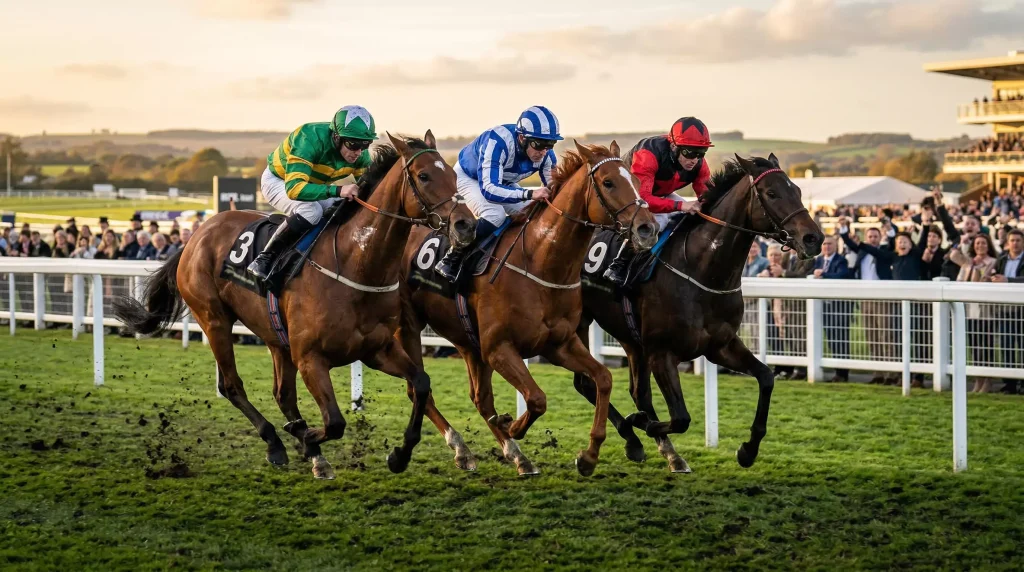
You have done the analysis. Three horses stand out from a competitive handicap field—their form is strong, the conditions suit, the odds are appealing. What you cannot determine with any confidence is which of the three will actually win, which will chase home for second, and which will fill the third spot.
This is exactly the situation the combination tricast was designed for. Instead of backing a single precise finishing order, you cover all possible permutations of your three selections. If your horses finish 1-2-3 in any order, you win.
The trade-off is cost. A combination tricast requires six times the stake of a straight tricast because you are placing six separate bets—one for each possible arrangement of your three picks. A £1 combination tricast costs £6. A £5 combination tricast costs £30. The insurance against getting the order wrong is not free.
For punters who can identify strong candidates but struggle to separate them, the combination tricast offers a practical solution. It rewards research into which horses will dominate without demanding the more difficult skill of predicting their exact sequence. As racing analyst David Renham has observed, these bets are “incredibly difficult to win because you must correctly predict the first, second, and third horses home”—the combination at least removes one layer of that difficulty.
Combination Tricast — More on this topic at tricast horse racing.
The 6 Permutations
Mathematics dictates that three distinct items can be arranged in exactly six different orders. For a combination tricast, this means your three horses—let us call them Archer, Beacon, and Compass—generate the following permutations:
Archer first, Beacon second, Compass third. Archer first, Compass second, Beacon third. Beacon first, Archer second, Compass third. Beacon first, Compass second, Archer third. Compass first, Archer second, Beacon third. Compass first, Beacon second, Archer third.
These six arrangements represent every possible finishing order for your three selections. One of them must match the actual result if Archer, Beacon, and Compass all finish in the first three places.
When you place a combination tricast, the bookmaker calculates your stake across all six permutations simultaneously. You do not need to manually enter each combination—selecting “combination tricast” or “tricast any order” handles the multiplication automatically. Your chosen unit stake applies to each of the six individual bets.
At settlement, only one of your six permutations can win. The tricast dividend is calculated based on the actual finishing order using the Computer Straight Forecast formula. You receive that dividend multiplied by your unit stake. The other five permutations are losers.
This structure matters for understanding returns. If the CSF tricast dividend is £300 and your unit stake was £1, you receive £300. However, your total outlay was £6 (six permutations at £1 each). Your net profit is £294. Had you placed a straight tricast on the correct order, you would have received £300 from a £1 investment—net profit £299. The combination’s broader coverage costs you £5 in this scenario.
Cost Calculation
The formula for combination tricast cost is simple: unit stake multiplied by six. Whatever amount you wish to wager on each permutation, multiply by six to find your total outlay.
A 50p unit stake produces a £3 combination tricast. A £1 unit stake costs £6. A £2 unit stake reaches £12. A £5 unit stake requires £30. These numbers escalate quickly when placing multiple combination tricasts across a day’s racing.
Consider a typical Saturday with three attractive handicaps. If you place a £1 combination tricast on each, your total investment is £18. Add a fourth race and you reach £24. This compares to just £4 for four straight tricasts at £1 each—but of course the straight tricasts demand you correctly predict the exact order every time.
Budget planning becomes essential. Before the first race, calculate your total exposure across all planned combination tricasts. If your betting bank is £100 and you intend to place five combination tricasts at £2 units, your total stake is £60—more than half your bank on a single day’s bets that are notoriously difficult to win.
One approach is to scale unit stakes based on confidence. A handicap where you have strong views on all three horses might warrant a £2 unit (£12 total). A more speculative selection where you like the horses but feel less certain about their relative merits might justify only a 50p unit (£3 total). This tiered system preserves capital for the bets where your analysis is strongest.
Many bookmakers allow minimum stakes as low as 5p per unit, meaning a combination tricast can cost as little as 30p. This enables punters to have multiple combinations in play without committing significant sums. The trade-off is proportionally smaller returns, but the recreational value of having skin in the game across several races can be worth the modest outlay.
Always check your total stake before confirming. Online platforms display the cost clearly, but in-shop it pays to do the mental arithmetic. The phrase “a pound tricast” means very different things depending on whether you are betting straight (£1) or combination (£6).
See also Tricast Bet Calculator.
When Combination Beats Straight
The combination tricast earns its place when separating your selections by finishing order is genuinely difficult. Several racing scenarios fit this profile.
Large competitive handicaps with tightly grouped form represent the classic combination tricast opportunity. The Cambridgeshire, the Cesarewitch, the Victoria Cup—these races attract fields where a dozen horses have legitimate winning chances. Identifying three that should be in the mix is hard enough. Declaring their exact order asks too much of any analysis.
Races where pace dynamics are unpredictable also favour combinations. If you expect a fast early gallop that might collapse, front-runners and closers become difficult to rank. The order in which horses finish often depends on tactical circumstances that only become clear in the final two furlongs. Your three selections might all be capable of winning, with the actual result hinging on who gets the cleanest run at the critical moment.
Weather changes between declaration time and race time scramble predictions. A horse who would have won on good ground might be struggling to handle soft conditions, while a mudlark in your selection comes into their own. If you suspect conditions might shift but remain confident your three horses will handle whatever emerges, the combination covers that uncertainty.
The combination also suits punters who are relatively new to form analysis. Building the skill to identify likely place-getters is more achievable than developing the refined judgement needed to sequence them correctly. As you gain experience, the proportion of straight tricasts in your betting might increase. Starting with combinations acknowledges your current limitations honestly.
Where the combination makes less sense: small fields with clear form lines, races where one of your three is distinctly superior to the others, or situations where draw bias heavily favours specific positions. These conditions permit confident ordering—and straight tricasts preserve more of your stake.
Covering All Angles
The combination tricast is an insurance policy. It accepts that predicting the exact 1-2-3 order is extraordinarily difficult and provides a mechanism to profit when your selections fill the places regardless of sequence.
That insurance costs five additional units of stake. Whether this represents good value depends on how often you would have backed the correct order with a straight tricast. If your strike rate on exact finishing sequences is low—and for most punters it is—the combination’s broader coverage justifies its premium.
Use combinations in competitive handicaps with closely matched contenders. Use them when pace scenarios are unclear. Use them when you are building your form-reading skills and can identify likely place-getters but struggle to rank them. Scale your unit stakes to your confidence level and your bankroll, always calculating total exposure before placing bets.
The appeal is covering all angles with your best three selections. The cost is accepting lower net returns when you win. For the races where genuine conviction about finishing order is impossible, that trade-off makes sense.
