
Grand National Tricast Betting: Strategy, History & Record Payouts
 Available in US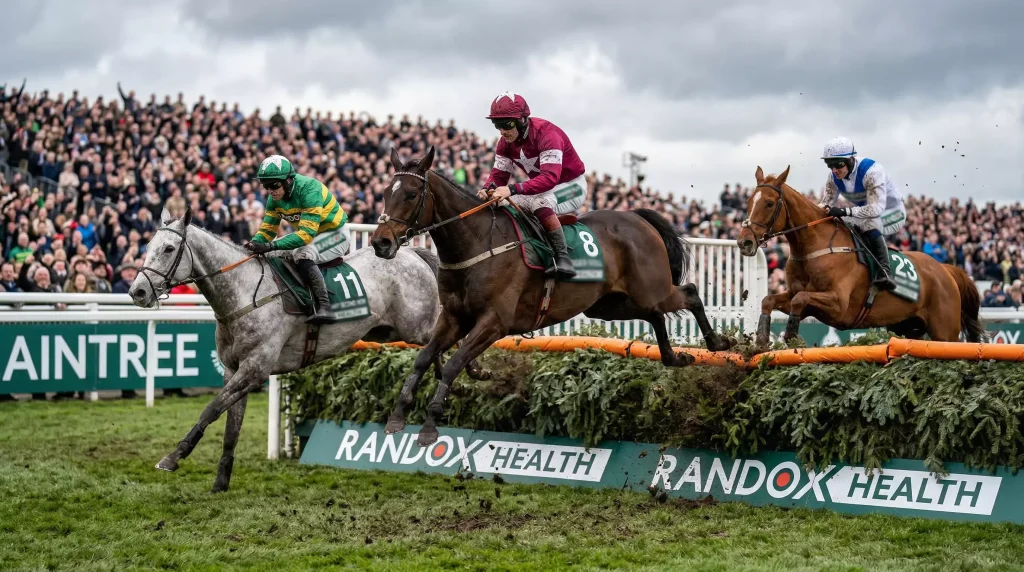
The Grand National stands apart from every other race on the British calendar. Forty runners thundering over thirty fences across more than four miles of Aintree turf, with half the field typically failing to complete the course. It’s the ultimate test of stamina, jumping ability, and sheer luck—and for tricast bettors, it represents both the greatest challenge and the greatest opportunity in UK racing.
Placing a Grand National tricast means predicting which three horses will finish first, second, and third in exact order from a field larger than most entire race meetings. The mathematical odds are staggering. The potential payouts match them. In 2026, someone turned an £8 each-way tricast stake into more than £61,000 by correctly backing Willie Mullins’ historic 1-2-3 sweep. A year earlier, the same bet type might have returned a fraction of that sum—or nothing at all.
This article examines the Grand National through the lens of tricast betting specifically. Not win bets, not each-way singles, but the exotic wager that asks you to identify the podium in correct sequence from the world’s most unpredictable steeplechase. The history reveals patterns. The 2026 case study shows what’s possible. And the strategy section offers a framework for approaching what might be the hardest bet in British racing to land—and one of the most rewarding when it does.
Why the Grand National Is Different
Every handicap race creates uncertainty. The Grand National manufactures chaos on an industrial scale. Understanding why requires examining the factors that make this race unique—and how those factors shape tricast outcomes.
The field size alone sets Aintree apart. Forty runners is the maximum permitted, and most years the race goes off at or near capacity. Compare that to a typical Saturday handicap hurdle featuring twelve to sixteen runners. The Grand National’s field generates 59,280 possible tricast combinations—nearly triple the 2,184 combinations in a fourteen-runner race. Finding the correct three horses in the correct order requires either extraordinary skill, extraordinary luck, or most likely a combination of both.
Attrition compounds the complexity. The thirty fences include some of racing’s most demanding obstacles: Becher’s Brook with its steep landing, the Canal Turn requiring a sharp left, Valentine’s Brook, The Chair. Falls, refusals, and unseated riders routinely eliminate a third or more of the field before the finish line. A horse can be travelling perfectly in third position with half a mile to run, hit the second-last wrong, and cost you your tricast without any failing of form or fitness. The National doesn’t just test your selection ability—it tests your tolerance for variance.
The extreme distance—four miles and two furlongs—introduces stamina questions that shorter races don’t ask. A horse might have impeccable form over three miles, the typical Grand National prep distance, yet find those additional eighteen furlongs beyond its reserves. Equally, proven National types who stay forever can run lacklustre races elsewhere, then come alive at Aintree. The race demands specific qualities that ordinary handicap form doesn’t always reveal.
Weight becomes more brutal over the distance. Top-weighted horses carrying eleven stone twelve pounds must maintain that burden over four miles of jumping. Lower-weighted runners at around ten stone can gain lengths on the flat sections through sheer physics. The handicapper’s assessments, usually reliable over shorter trips, become approximations over Aintree’s unique test.
These factors create paradoxical conditions for tricast betting. On one hand, the unpredictability makes correct prediction nearly impossible—hence the massive payouts when outsiders fill the frame. On the other hand, the chaos occasionally produces results dominated by a single training operation, as 2026 demonstrated. The race rewards both contrarian longshot punts and strategic bets on powerful yards that might sweep the podium. Either approach can land enormous dividends. Neither offers anything resembling consistent probability.
The emotional element adds another layer of complexity. National Day is Britain’s most-watched horse race, attracting viewers who bet once a year on names that appeal to them. This influx of recreational money distorts trifecta pools away from rational probability assessment. Casual punters back horses based on names, jockey fame, newspaper tips, and gut instinct rather than form analysis. The resulting pool dynamics can either inflate payouts—when recreational picks fail—or compress them when the casual crowd happens to back winners.
For tricast bettors, this environment presents both opportunity and challenge. The opportunity lies in identifying value the recreational market overlooks. The challenge lies in navigating a race where even expert analysis provides limited edge over educated guessing.
Grand National Tricast Betting — More on this topic at tricast horse racing.
Payout History: A Decade of Dividends
The Grand National tricast has produced some of racing’s largest dividends—and some of its most modest. The variance tells you everything about the race’s unpredictability and the factors that drive exotic payouts.
The 2016 National offers a benchmark for what happens when outsiders dominate. Rule The World won at 33/1, Last Samurai finished second at 8/1, and Vics Canvas claimed third at a massive 100/1. The tricast paid £23,181.70. Anyone holding a £1 straight tricast on that combination collected over twenty-three thousand pounds. Anyone backing a combination tricast covering all permutations wagered £6 and collected the same dividend. The hundred-to-one shot in third ensured that almost nobody held the winning combination—hence the outsized payout.
The trifecta that same year paid £57,778.10—nearly 2.5 times the tricast dividend. Pool betting amplified the outsider finish because recreational National Day punters had loaded money on shorter-priced favourites that failed to place. The crowd’s collective error became a windfall for the minority holding winning tickets.
Contrast 2016 with 2023. That year’s National produced a far more predictable result, with better-fancied horses filling the places. The tricast paid just £1,699.84—roughly 7% of the 2016 figure. When form holds up and the chaos doesn’t materialise, payouts compress dramatically. The 2023 result wasn’t a shock to the market, so fewer punters lost their bets, and the winning tricast tickets split a less valuable pot.
The swing between £1,699 and £23,181 for the same bet type in the same race illustrates the variance inherent in Grand National tricast betting. You’re not playing a consistent game with predictable returns. You’re exposing yourself to extreme outcomes in both directions—massive payouts when outsiders sweep the podium, disappointing returns when favourites oblige, and zero when your selections fail to place.
The years between tell similar stories. When the winner goes off at double-figure odds and second or third includes a long-odds outsider, payouts climb into five figures. When market principles assert themselves and stronger-fancied runners dominate, payouts settle into four figures or less. The pattern is consistent: the Grand National rewards those who correctly identify unlikely combinations, punishes those who back obvious ones, and leaves most punters holding worthless tickets regardless of approach.
Recent years have trended toward higher payouts as the race has become more competitive and attritional. The introduction of welfare-focused course modifications hasn’t reduced the chaos—it’s merely redistributed it. Falls still happen. Upsets still materialise. The National remains the ultimate test for tricast bettors.
Looking at the decade from 2016 to 2026, the pattern becomes clear. Years with outsider-dominated finishes—2016’s hundred-to-one third-placer, 2026’s 33/1 winner—generated five-figure tricast dividends. Years with more predictable results—2023’s favourite-laden podium—generated four-figure returns. The median payout sits somewhere in the £3,000 to £6,000 range for a £1 stake, but medians obscure the extremes that define this bet.
No other race in the British calendar produces such variance. A typical Saturday handicap might see tricast payouts range from £200 to £3,000 depending on the result. The Grand National ranges from under £2,000 to over £60,000 for the same stake. That’s the trade-off punters accept: higher potential rewards accompanied by higher uncertainty about what those rewards will actually be.
See also How Tricast Dividends Are Calculated.
The 2026 Mullins Triumph: A Case Study
The 2026 Grand National rewrote the record books. For the first time in the race’s history stretching back to 1839, a single trainer saddled the first three horses home. Willie Mullins, the dominant force in Irish jumps racing, achieved what no predecessor had managed: a clean sweep of the Aintree podium.
Nick Rockett won the race at 33/1. I Am Maximus, better fancied after winning the previous year’s renewal, finished second. Grangeclare West completed the Mullins 1-2-3. Three horses from the same Closutton yard, trained by the same man, filling every podium position in the world’s most famous steeplechase.
The human story behind Nick Rockett elevated the result beyond statistics. Stewart Andrew, the horse’s owner, had named him in tribute to his late wife Sadie. She had wanted a horse in training with Mullins but passed away before seeing her wish fully realised. “Nick Rockett wasn’t my horse, it was my wife’s horse,” Andrew said after the race. “She wanted a horse in training with Willie. When we found out that she had terminal cancer, Willie ran him just to let Sadie see him. He finished fourth. He’s just done unbelievable.”
From a betting perspective, the result demonstrated the power of backing patterns rather than specific horses. Someone—or several someones—turned an £8 each-way tricast stake into more than £61,000 by backing Mullins’ runners in combination. The bet didn’t require predicting which specific Mullins horses would place, only that the operation’s depth would deliver a sweep. When that sweep materialised, the payout arrived.
This approach represents a strategic evolution in Grand National tricast betting. Rather than attempting the near-impossible task of identifying three specific horses in exact order from forty runners, the £61,000 winner identified a trainer likely to dominate and covered the permutations. Mullins had entered a powerful squad—multiple legitimate contenders any of whom could place. Backing all permutations of his top horses reduced the number of correct predictions needed while still accessing tricast payouts if the stable delivered.
The 2026 result won’t repeat every year. Mullins’ dominance was historic precisely because no trainer had achieved it before. But the underlying lesson applies more broadly: in a race this chaotic, betting on patterns—trainer strength, yard form, preparation approaches—may offer better expected value than attempting to pick three individual horses from forty at the correct prices.
Patrick Mullins, Willie’s son and the winning jockey aboard Nick Rockett, captured the emotional weight: “To win a Grand National is one thing. To win it for my dad? That’s everything.” The tricast payout was £61,000. The story behind it was priceless.
Strategy for Grand National Tricast
Approaching the Grand National tricast requires accepting certain realities. The odds are against you—heavily against you. Most tricast bets lose. The question is whether you can tilt probability slightly in your favour while managing stake to survive the inevitable losing years until a winning combination lands.
Focus on trainers with depth. The 2026 result wasn’t a fluke of random chance—it reflected Mullins’ systematic strength in National Hunt racing. Yards that send multiple legitimate contenders to Aintree increase the probability that their runners fill multiple podium positions. Mullins, Gordon Elliott, Nicky Henderson, and a handful of other operations regularly field three to five horses with genuine claims. Backing permutations of their runners costs more than a single straight tricast but dramatically improves your probability of holding a winning ticket.
Prioritise stamina-proven horses. The Grand National’s four miles and two furlongs eliminates horses that lack the reserves to complete the course while still travelling strongly. Look for runners that have won or placed over extreme distances—ideally over four miles, though strong performers over three and a half miles warrant consideration. First-time National runners without distance proof are gambles within a gamble. Proven stayers may not offer the longest prices, but they complete the course at higher rates, keeping your tricast alive.
Consider combination tricasts rather than straight tricasts. A straight tricast requires exact order prediction—your first-choice must win, your second must place second, your third must place third. At the National, this precision is almost impossible to achieve. A combination tricast covers all six permutations of your three selections, meaning any finishing order among them triggers a payout. The cost multiplies by six, but the probability of winning increases proportionally. For a race this unpredictable, combination tricasts represent the more realistic approach.
Manage your budget brutally. National tricasts can become expensive quickly. A £1 combination tricast costs £6. Backing multiple combinations across different selections—say, three different groups of three horses—costs £18 or more. Before National Day, decide what you’re prepared to lose entirely. Assume every ticket will fail. If a win arrives, treat it as unexpected fortune rather than vindication of skill. This mindset keeps stakes proportionate and prevents chasing losses in future years.
Examine the weights carefully. Lower-weighted horses gain a genuine advantage over the National’s extreme distance. A horse carrying ten stone has less burden than one carrying eleven stone twelve—and over four miles of jumping, that difference compounds. Bottom-weighted runners with stamina credentials deserve serious consideration even if their form figures appear modest. The handicapper’s assessments become approximations at Aintree’s unique test.
Watch for course form. Aintree’s fences are unique, and horses that have handled them before hold an edge over newcomers. Previous National placers—even those who finished outside the money but completed the course—demonstrate the necessary jumping ability and stamina. First-time runners may possess the physical tools but lack the experience to deploy them over these specific obstacles.
Don’t ignore the each-way tricast option. Some bookmakers offer each-way tricasts where you’re paid a reduced rate if your three selections finish in the places but not in your specified order. This variant costs double a straight tricast but provides a fallback—if your selections fill the podium in any order, you collect something rather than nothing. At a race as volatile as the National, the each-way component can soften losing years while preserving upside when your exact order lands.
Finally, accept what you cannot control. The Grand National involves thirty fences over four miles with forty runners. Horses will fall. Jockeys will make errors. Interference will occur. Your perfectly-reasoned selection can be eliminated by circumstances entirely beyond form analysis. Build this variance into your expectations. A National tricast isn’t an investment—it’s a high-risk speculation with asymmetric payoffs. Approach it accordingly.
Tricast vs Trifecta at Aintree
The Grand National presents a specific dilemma: should you bet the tricast with a bookmaker or the trifecta through the Tote pool? The historical evidence offers guidance.
In 2016, the tricast paid £23,181.70 while the trifecta paid £57,778.10. The pool bet delivered nearly 2.5 times the bookmaker bet for the same correct prediction. This wasn’t anomalous—it reflected structural factors that apply whenever outsiders dominate at a major meeting.
National Day brings out casual punters in their millions. People who bet once a year, backing names they recognise, loading combinations featuring the horses they’ve read about in newspapers. This recreational money concentrates on shorter-priced favourites and well-publicised runners. When those selections fail and long-odds outsiders fill the frame, the trifecta pool explodes—because almost nobody backed the winning combination, and the few who did claim enormous shares.
The CSF formula that calculates tricast dividends can’t capture this crowd psychology. It generates payouts based on Starting Prices and algorithmic adjustments, not on where recreational money actually flowed. A 100/1 shot finishing third generates a large CSF component, but the trifecta pool might multiply that further because the pool was loaded against that outcome.
The practical recommendation: if you’re backing outsider combinations at the Grand National, trifecta typically offers better expected value. The very conditions that make the race unpredictable—massive field, high attrition, emotional betting—amplify trifecta payouts beyond what tricast can match.
If you prefer tricast, consider split stakes. Half your budget on tricast, half on trifecta, same selections. This hedges against the scenario where one bet type dramatically outperforms the other. You’ll never maximise either payout, but you’ll capture value wherever it appears.
The exception comes if you’re backing a predictable result—a short-priced favourite winning with other market principles. In that scenario, trifecta pools will be crowded with winning tickets, compressing payouts. Tricast, calculated by formula, won’t punish you for popularity. But at the Grand National, predictable results are rare. The race rewards those who anticipate chaos, and trifecta amplifies that reward.
Whatever your choice, make it before the day arrives. National morning is too late for calm analysis. The hype, the atmosphere, and the sheer volume of information create conditions where impulse overrides strategy. Decide your approach in advance: tricast, trifecta, or split stakes. Pick your selections methodically. Place your bets. Then watch the race that stops a nation—knowing you’ve given yourself the best possible chance at an extraordinary payout.
The Ultimate Test: Is It Worth the Punt?
The Grand National tricast represents the hardest bet in British racing to land—and one of the most rewarding when it does. Forty runners, extreme attrition, unpredictable chaos, and a field so competitive that almost any finishing order is possible. The mathematics work against you. The variance punishes most participants most years.
And yet. £8 became £61,000 in 2026. Twenty-three thousand pounds awaited anyone who backed three specific horses in 2016. The payouts exist. The dream materialises for someone each April.
Whether to participate depends on your relationship with risk and your betting philosophy. If you demand positive expected value from every wager, the Grand National tricast probably isn’t for you—the odds of correctly predicting the podium from forty runners are too steep for any analysis to overcome. If you view National Day as an annual entertainment expense, willing to lose your stake for the chance at life-changing returns, the tricast offers an appropriate vehicle.
The strategies outlined here—focusing on trainer depth, prioritising stamina, using combinations, managing budget—don’t guarantee success. They merely tilt probability slightly in your favour while surviving the years when nothing lands. One correct ticket across a decade of betting can justify the cumulative losses. That’s the National tricast proposition: accept the journey for the destination.
Somewhere on the first Saturday of April 2026, someone will turn a modest stake into tens of thousands of pounds. They’ll have identified an unlikely combination, trusted their analysis or their instinct, and held the winning ticket while millions of others hold nothing. The race that stops a nation will deliver its annual miracle. The ultimate test will crown its next unlikely champion.
